Applications · Vision
Industrial machine vision, for robots that see.
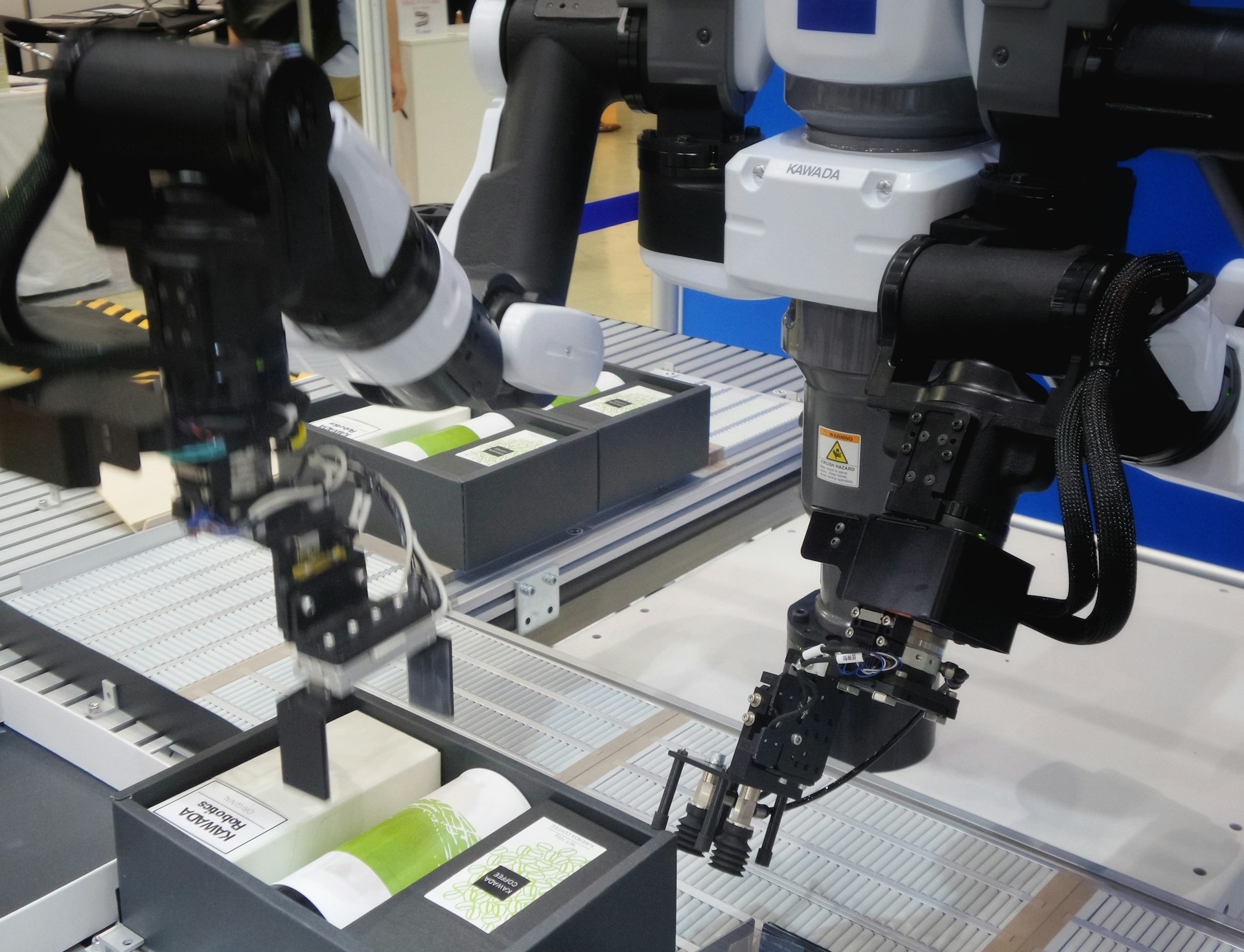
We integrate 2D and 3D vision systems to guide the robot when picking parts, recognize the model being processed and run quality control right on the line.
Benefits
What vision changes
- 01
Parts don't need fixturing
The robot finds the part's position and orientation by itself, so you need fewer centering fixtures.
- 02
More models in one cell
Vision recognizes the model and the cell adapts; the changeover is picked from a menu.
- 03
Every part inspected
Presence, position, dimensions and visible defects are checked in line, with no sampling.
- 04
Less scrap
Errors are caught right away, before the part moves down the line or reaches the customer.
Scope
What we build
- Vision-guided pick and place
- 2D and 3D robot guidance
- Recognition of part model and side
- Presence / absence checks
- In-line inspection and quality control
- Code and marking reading
- Camera-to-robot calibration
- AGV navigation
Robots and technology
Vision, robots and line working together
We work with Cognex and Keyence vision systems and ifm sensors, integrating them with collaborative and industrial robots and the line PLC. We choose lighting and optics by testing on the real part: that is what most often makes or breaks a vision project.
Our method
From site visit to start-up
- 1
Site visit and analysis
We study the process on site: parts, throughput, space and the people involved.
- 2
Concept and 3D layout
We propose the solution with a cell layout and a first cycle-time estimate.
- 3
Design and simulation
We design grippers and fixtures and check trajectories before building.
- 4
Build and programming
We build, wire and program robots, vision and operator software.
- 5
Testing and start-up
We test the cell with real parts and bring it into production together with your staff.
- 6
Training and support
We train operators and stay available, remotely too, for changes and new products.
We've done it before
Related projects and products

FAQ
The questions we hear most often
What is the difference between 2D and 3D vision?
2D vision finds the part's position and rotation on a plane and is the simplest choice when parts lie flat. 3D vision also measures height and tilt and is needed when parts are stacked or in bulk.
Does the line need to be changed to add vision?
Rarely. Often you just add a camera and lighting to an existing station, and the robot receives the part's coordinates from the vision system. We assess space, ambient light and available cycle time on site.
Can different part models be recognized?
Yes. In the Fir project the cell recognizes and picks 12 different part models, and the model is changed from a menu.

Have a similar application to automate?
Tell us about parts, throughput and space: we'll propose the simplest, most effective solution.